A substation engineer specifying networking hardware for a new fiber ring has two serious industrial options on the shortlist: EtherWAN Systems and Comnet. Both build hardened Ethernet switches, media converters, and PoE equipment rated for the same brutal temperature swings, but the similarities stop well before the compliance paperwork does.
This comparison breaks down where EtherWAN's and Comnet's Ethernet switches, media converters, and industrial networking hardware actually differ, and why it matters once a project needs Made-in-USA, BABA-documented equipment.
Note: If your next project needs BABA-eligible Ethernet switches, media converters, or PoE hardware that won't stall at the compliance review, then Comnet's US-designed, developed, and tested lineup is built to clear that bar the first time. If you're still weighing NDAA, TAA, or BABA requirements against a shortlist of vendors, then talking to Comnet's team now can save a change order later. Either way, reach out through Comnet's contact page to get the right switch, converter, or PoE solution matched to your project before procurement becomes the bottleneck.
Company Background: Comnet and EtherWAN Systems
EtherWAN Systems and Comnet serve the same critical infrastructure and industrial networking buyers, but their company histories and manufacturing models differ in ways that matter for compliance-driven projects.
Comnet
Comnet, a brand under Acre Security, builds hardened managed Ethernet switches, fiber media converters, PoE switches, network extenders, and industrial power supplies for the same physical security, utility, transportation, and critical infrastructure markets.
Comnet's Ethernet switches and media converters are designed, developed, and tested in the United States, with Made-in-USA options and select models carrying Build America Buy America (BABA) certification alongside standard NDAA and TAA compliance, backed by a limited lifetime warranty and US-based technical support.
Both companies serve the same industrial networking buyers, which is exactly why the differences that remain matter so much.
EtherWAN Systems
EtherWAN Systems, Inc. was founded in 1996 and built its business on ruggedized Ethernet connectivity for harsh environments: Ethernet switches, media converters, Ethernet extenders, and PoE gear for intelligent transportation, video surveillance, and critical infrastructure. The company became a subsidiary of Germany's Phoenix Contact Group in 2017. EtherWAN's product design happens in-house, with manufacturing based in Taiwan at an ISO 9001:2015-certified factory, and it backs its hardened-grade Ethernet switches and media converters with a limited lifetime warranty plus complimentary technical support.
Ethernet Switches: EtherWAN vs Comnet
Both companies build hardened managed Ethernet switches rated for -40 to 75°C (-40 to 167°F) operation, which matters for outdoor cabinets, substations, and roadside enclosures where a commercial-grade switch fails within a season.
Before comparing the two lineups, it helps to remember what makes a switch a switch in the first place: an Ethernet hub broadcasts every incoming packet to every connected port, creating a single collision domain that slows down as more devices join a network, while an Ethernet switch reads the destination address on each packet and forwards it only to the port that needs it. That distinction is why virtually every industrial network today, including EtherWAN's and Comnet's hardened lineups, runs on switches rather than hubs.
Comnet's Ethernet Switches
Comnet's hardened Ethernet switches (see the full line of Ethernet switches here) match the same operating temperature range and add up to IEEE 802.3bt power delivery at 90 watts per port, Port Guardian cybersecurity features, and NDAA/TAA compliance across the line, with specific models carrying BABA certification for federally funded infrastructure projects.
For a network engineer choosing between the two, the practical question isn't which industrial switches survive the weather. Both do. It's which Ethernet switches carry the compliance documentation a given project actually requires, and that's where Comnet's Made-in-USA and BABA-certified options pull ahead of anything manufactured overseas, EtherWAN included.
Industrial buyers in transportation, utility, and physical security networking rarely evaluate Ethernet switches on ruggedness alone. An industrial network built around the wrong compliance profile can stall a project long after the switches are already on order, which is why the industrial networking market treats compliance documentation as a spec, not an afterthought.
EtherWAN's Ethernet Switches
EtherWAN's Ethernet switches carry NEMA TS2 certification (as does Comnet) for transportation deployments, IEC 61850/IEEE 1613 for utility substations, and IEC 62443 for cybersecurity on select models, along with UL certification for safety.
Media Converters: EtherWAN vs Comnet
Media converters come up a lot in projects that are converting Ethernet to fiber, and both companies build hardened media converters for substation and industrial use. EtherWAN's EL1141 series media converters are IEC 61850-3/IEEE 1613 certified for power substation applications and rated to the same -40 to 75 °C range as its Ethernet switches.
Comnet's RLMCSFP series electrical substation-rated media converters share the same IEC 61850-3/IEEE 1613 certification and are rated for a -40 to 85 °C operating temperature range. They can run on 12 to 24 VDC or 48 VDC power inputs, with PoE-enabled versions supporting up to 60 watts and SFP optical ports for flexible fiber connectivity.
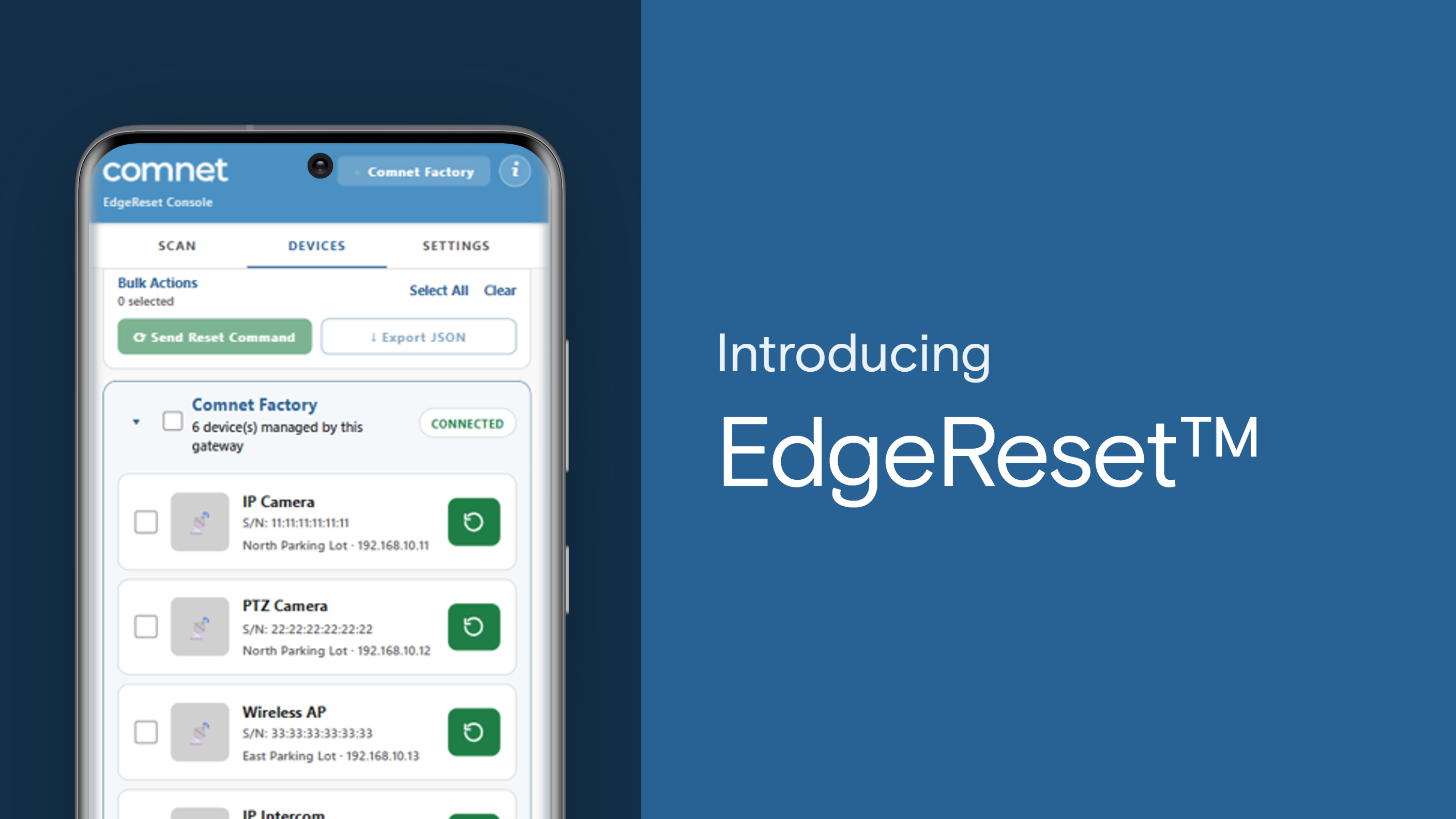
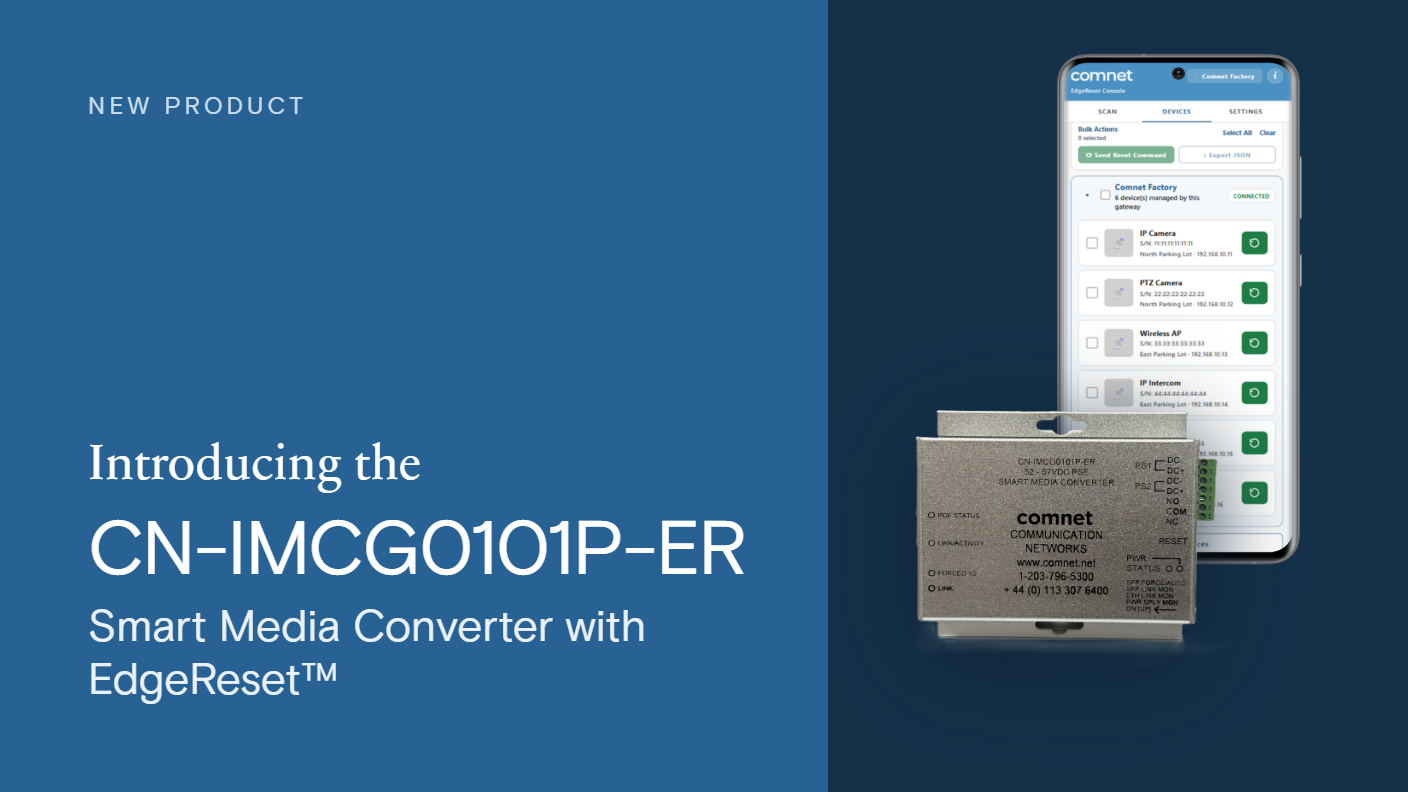
For industrial applications, EtherWAN and Comnet offer PoE media converters that deliver up to 90 watts of power to remote devices. Comnet differentiates itself with its 90 watt Smart Media Converter, which features a remote reboot function not typically found in Layer 1 media converters, reducing the need for on-site visits when a camera or other connected device goes offline.
The overlap in specs between the two companies' media converters is real, and both hold up in the same industrial environments: substations, roadside cabinets, and outdoor security enclosures. The difference again comes down to where the media converters are built and what compliance paperwork ships with them. A utility or transportation agency that requires BABA documentation on its media converters and industrial Ethernet switches has one of these two vendors to choose from, and it isn't the one manufacturing in Taiwan.
Integrators standardizing on a single media converter platform across multiple sites also care about parts availability. A domestic supply chain for media converters and Ethernet switches tends to mean shorter lead times on replacement units, which matters when a failed converter is holding up a fiber run rather than a full switch replacement.
PoE Solutions and Ethernet Extenders
Yes, EtherWAN and Comnet offer PoE switches and media converters in both hardened and commercial versions, supporting IEEE 802.3at and 802.3bt standards. EtherWAN's PoE lineup also includes its proprietary Power over Link (PoL) Ethernet extenders, which delivers both power and data over existing coaxial cable or twisted pair. That's a legitimate way to extend PoE cameras beyond the standard 100-meter Ethernet limit without pulling new cable.
Comnet's answer is its CopperLine Ethernet extender line, delivering pass-through power over UTP or coax for single- and multi-channel deployments, alongside PoE switches and media converters supporting the full IEEE 802.3bt standard at up to 90 watts per port.
For a security integrator wiring PoE cameras across an existing coax plant, either company's PoE solutions will do the job. The cost difference tends to show up in total power budget per switch: Comnet's 90-watt-per-port, 720 W ceiling on the CNGE10FX2TX8MSBT model, for example, gives integrators more headroom for high-draw PTZ cameras and heated enclosures without adding a second switch to the networking closet.
Compliance and Manufacturing: Why It Matters for Critical Infrastructure Buyers
Both EtherWAN and Comnet are NDAA compliant, and both issue TAA compliance guidance for federal buyers, so neither company is disqualified from most government contracts on that basis alone. What separates them is manufacturing origin.
EtherWAN's Compliance and Manufacturing
EtherWAN's Ethernet switches and media converters are designed in-house but manufactured in Taiwan, under a company that is itself a subsidiary of Germany's Phoenix Contact Group.
Comnet's Compliance and Manufacturing
Comnet's Ethernet switches, media converters, and industrial hardware are designed, developed, and tested in the United States, and specific models carry Build America Buy America certification, a documentation requirement that goes beyond NDAA and TAA and applies specifically to federally funded infrastructure projects. Comnet ranks among the best BABA compliant Ethernet switches.
Which Ethernet Switch Should I Buy?
For a procurement manager who has to prove domestic manufacture, not just non-restricted sourcing, that distinction determines which vendor's Ethernet switches actually clear the paperwork. It's a real cost consideration too: specifying the wrong switch mid-project can trigger a change order or a resubmittal, a cost most industrial infrastructure projects can't absorb on a compliance technicality.
If the deployment only needs NDAA/TAA compliance, or it's already standardized on EtherWAN's ecosystem, EtherWAN's Ethernet switches remain a legitimate, well-built option for industrial buyers. If it's a US federally funded build or a contract with BABA requirements, Comnet's Ethernet switches, media converters, and PoE hardware are built specifically to clear that bar.
Procurement teams evaluating industrial Ethernet switches for a multi-site rollout should also weigh lead times and spare-parts availability alongside compliance. A vendor with US-based technical support and domestic manufacturing can typically turn around replacement Ethernet switches faster than one shipping from overseas, which matters when a failed switch is holding up a substation commissioning date.
Match the switch to the compliance requirement first, then the port count and power budget. A federally funded or BABA-documented project points toward Comnet's Made-in-USA Ethernet switches. A project with only NDAA/TAA requirements, or one already standardized on EtherWAN's ecosystem, has a legitimate option in EtherWAN's hardened switch lineup. From there, count how many PoE cameras or devices the switch needs to power and size the port count and power budget accordingly, since cost and reliability both hinge on getting that number right the first time.
The Bottom Line
Both companies have genuinely earned their place on shortlists for hardened Ethernet and fiber projects, and neither is a bad choice purely on engineering merit. The deciding factor, more often than not, comes down to the one thing a data sheet can't fake: where the media converters and switches were actually built.
If your next project needs Ethernet switches, media converters, or industrial hardware built and tested in the United States, talk to Comnet's team or explore the full lineup at comnet.net.