Understanding NDAA & TAA Compliance in Security Transmission Products
by Acre security
Compliance is at the core of secure and reliable network solutions. For those in government, public sectors, or industries requiring stringent standards, understanding certifications like NDAA and TAA is vital to making the right choice for your network infrastructure.
What These Certifications Mean
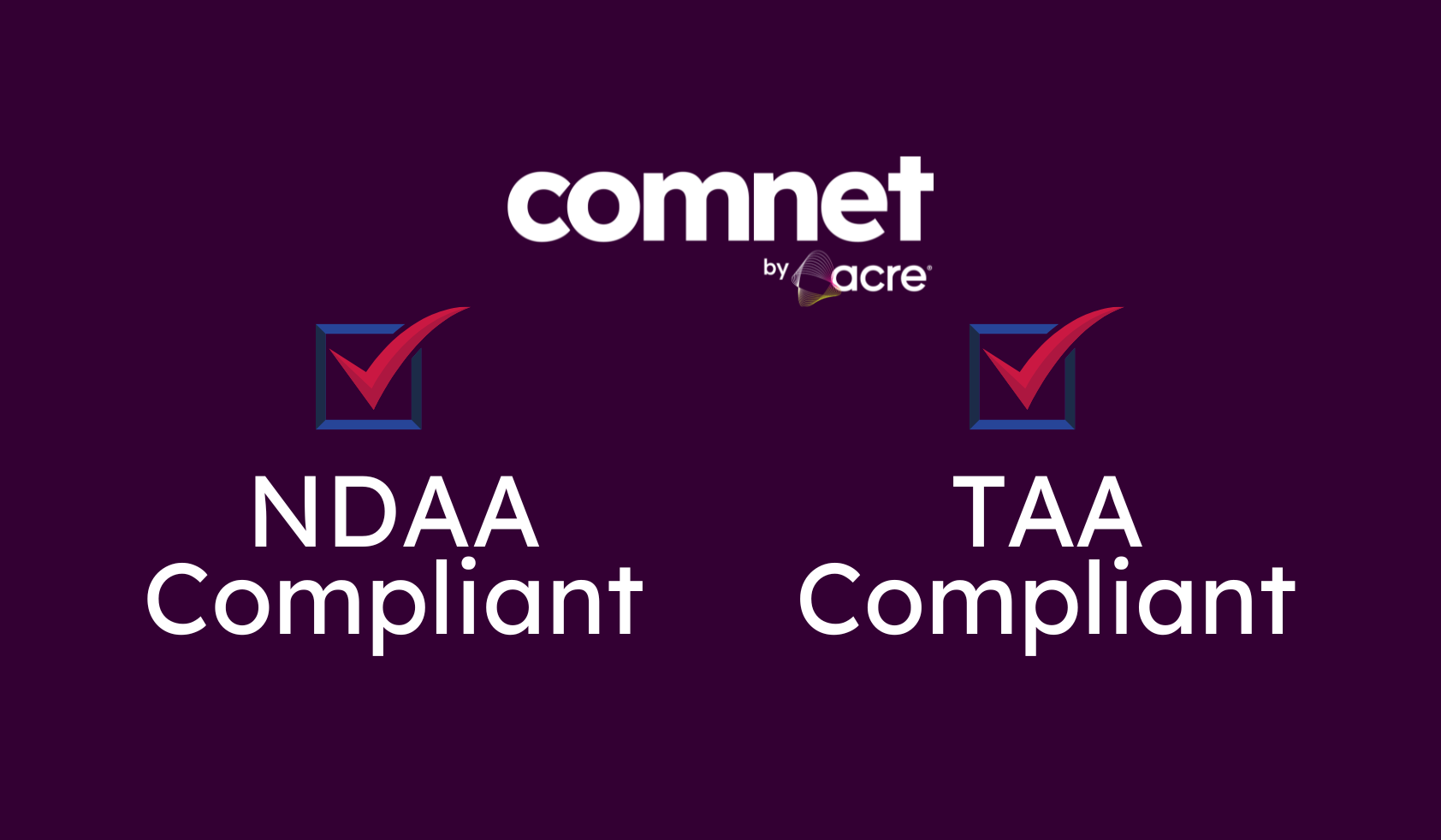
- NDAA Compliance ensures certified products aren't sourced from restricted nations, safeguarding cybersecurity.
- TAA Compliance stipulates that a majority of production occurs in the U.S. or an approved country.
How Comnet Delivers Compliance
Our “Made in the USA” solutions—including wireless Ethernet transmission, media converters, and network management software—fulfill these critical standards while exceeding industry requirements.
We maintain full control over the design, testing, and manufacturing process to ensure every product is vetted, reliable, and ready for integration into highly regulated environments.
Proof in Action
From extended distance transmission solutions powering innovative smart city projects to defense-grade fiber optic transmission designed for critical military applications, Comnet's products are built to deliver unparalleled performance and reliability.
With decades of expertise, we continue to set the gold standard in secure networking technology, helping organizations achieve seamless communication in even the most demanding environments. Read our success stories here.
Explore Comnet’s range of NDAA and TAA certified products. Designed to meet stringent compliance requirements, our solutions ensure both security and trust.
Because when it matters, trust Comnet.
Related Posts
Industrial Ethernet Switches for Intelligent Transportation Systems (ITS): Buyer's Guide
Intelligent Transportation Systems rely on communication networks that must perform without interruption. IP cameras at intersections, variable message signs along highways, traffic signal controllers, tunnel sensors — the data transmission linking this equipment has direct safety consequences. Choosing the right industrial Ethernet switch is one of the most critical network decisions an ITS engineer makes. The advantages of purpose-built, industrial-grade hardware over commercial alternatives are clear: greater reliability, secure communication, and availability when it matters most. This buyer's guide covers what makes an industrial Ethernet switch suitable for ITS, how managed and unmanaged models compare, the key features to evaluate, and which Comnet switches are purpose-built for transportation deployments.
OT/IT Convergence in Power Utilities: What It Means for Your Network Infrastructure
Power grids are no longer the centralized, one-directional systems they were built to be. The rapid expansion of distributed energy resources, advanced metering infrastructure, and continuous remote monitoring requirements has made the traditional separation between field control systems and enterprise platforms unsustainable. For network engineers and system designers in the energy sector, IT/OT convergence is the defining infrastructure challenge of this decade — and how you architect the underlying network will determine whether your utility capitalizes on it or is constrained by it.
What is NERC CIP? A Guide to Critical Infrastructure Protection Standards
The electric grid that powers homes, businesses, hospitals, and essentially modern society depends on a foundation of security, reliability, and resilience. To help safeguard that foundation, the North American Electric Reliability Corporation (NERC) enforces a comprehensive set of regulations called NERC CIP — Critical Infrastructure Protection standards.