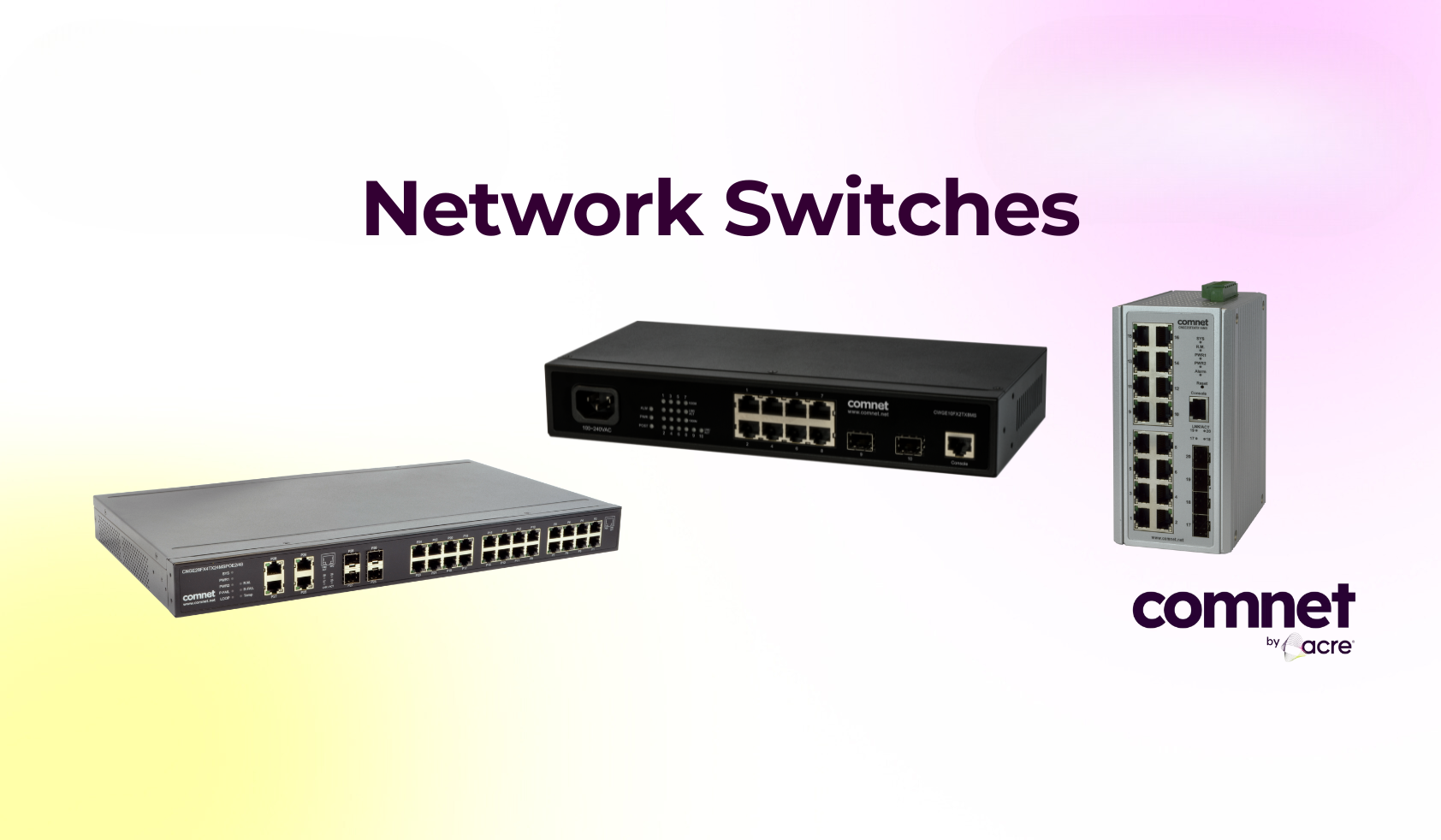
Network switches are the unsung heroes of modern connectivity, smoothly managing the flow of data across diverse network configurations. These devices are crucial for keeping networks running well and secure in our digital world.
At comnet by acre, we know how important network switches are, so we’re here to help answer your common questions about them.
1. What is meant by network switching?
Network switching is the process through which switches direct data packets through a network. This process is vital for maintaining the efficient flow of data, minimizing delays, and preventing network congestion. Comnet by acre’s switches are designed with a deep understanding of this critical function, providing seamless and efficient network performance "When It Matters".
2. What are network switches used for?
Network switches work tirelessly to manage data flow within a network, deftly directing information from one device to another. This is particularly vital in contexts where reliability and precision are paramount—whether it's in an industrial control system or a robust security network. In such high-stakes scenarios, comnet's network switches are engineered to perform flawlessly, proving their worth "When It Matters."
3. What is the difference between a network switch and an Ethernet switch?
A "network switch" and an "Ethernet switch" both control data traffic. However, an Ethernet switch adheres to Ethernet standards. These standards are important for most wired local area networks (LANs).
Comnet by acre's Ethernet switches are designed with a stellar focus on reliability and performance, ensuring your network remains robust—especially "When It Matters."
4. Which switch is best in networking?
The ideal switch for your network depends entirely on your specific requirements. If you're operating in stringent conditions, you'll find comnet's Industrial Hardened Ethernet Switches, designed for rugged environments, to be an invaluable addition. In scenarios requiring advanced network control, our Managed Switches offer comprehensive configurability and monitoring. Regardless of the context, every comnet by acre switch is built with a guarantee—it's going to deliver "When It Matters."
Conclusion
In today's interconnected world, the role of network switches has never been more critical. At comnet by acre, we provide solutions to keep your network running smoothly. We ensure reliability and efficiency, no matter the challenges you face.
When dealing with connectivity issues, our high-performance switches can help secure your network's success. Investing in our technology means investing in the foundation of your network.
Trust comnet by acre to empower your operations "When It Matters" most, ensuring your connectivity remains robust, secure, and ready for the future.
Tell us about your security needs - Contact us today!